
An Illustrated Introduction to Stream Macroinvertebrates
- rewilddesigncompan
- Feb 18
- 5 min read

Most of a river’s story happens where we rarely look.
I first learned about macroinvertebrates (aka macros, river bugs, stream bugs) during a stream survey last semester (more on that later). Once you start noticing them, it’s hard to stop. Rivers read differently. This post is an invitation to look closer, learn a few names, and start understanding what the smallest residents are telling us about the rivers we love.
Every illustration you see here was drawn by me as part of my ongoing work exploring western ecosystems. These images are original and protected, so please reach out if you’d like to share or use them.
But what is a macroinvertebrate? Macroinvertebrates are small, spineless creatures that usually are found aquatic ecosystems. Most (but not all) are insects in their larval or nymphal stage and one day they’ll hatch into adult insects.
They’re small enough to overlook, strange enough to confuse, and important enough to tell us almost everything about the health of a stream.
If you’ve ever wondered what’s actually living down there, this is for you.
I recently watercolor illustrated this infographic depicting 18 common types of macros. I’ll walk you through some ID tips and sprinkle in some fun facts about each type as we go.
But first, I’ll walk you through some basic info about macroinvertebrate life cycles that’s important to understand to get the whole picture.

Macroinvertebrate Life Cycles
When it comes to macroinvertebrate life cycles, every type does it a little different. In general, there are three options: complete metamorphosis, incomplete metamorphosis, and no metamorphosis.
Understanding metamorphosis helps us to see the entire picture of a macroinvertebrate’s life.
Complete Metamorphosis
Think butterflies. They hatch as caterpillars, grow, then turn into chrysalises, then hatch into adult butterflies. There are four stages:
Egg → Larva → Pupa → Adult
River bugs such as flies, caddisflies, beetles, and dobsonflies go through complete metamorphosis.
What this tells us is that the larva will look drastically different from the adult.
Incomplete Metamorphosis
You might not have heard of this one before. It’s plenty common in the insect world, yet not as magical as complete metamorphosis. It has three stages:
Egg → Nymph → Adult
The nymph is a mini, wingless version of the adult, so there’s often some resemblance.
Macros that exhibit incomplete metamorphosis include dragonflies, mayflies and stoneflies.
No Metamorphosis
Some macroinvertebrates do not undergo drastic changes during their lifetime, but they do increase in size. The young are only distinguishable from the old by size (and sometimes coloration).
The macroinvertebrates that don’t metamorphose are usually not insects. Aquatic worms, snails, scud, aquatic isopods, and leeches.

1. Stoneflies
Pollution Tolerance: very sensitive to pollution
Preferred Habitat: cold, rocky streams
Metamorphosis: Incomplete
Size: 0.2”-2.5” long
ID Tips: Stoneflies have two tails (cerci) and flattened bodies.

2. Midges
Pollution Tolerance: pollution tolerant
Preferred Habitat: slow-moving, nutrient-rich water
Metamorphosis: complete
Size: 0.125”-0.5” long
ID Tips: midges look like worms, but they have segmented bodies. They have no legs.

3. Air-breathing Snails
Pollution Tolerance: pollution tolerant
Preferred Habitat: slow-moving, nutrient-rich water
Metamorphosis: none
Size: 0.125”-1” long
ID Tips: the shells of air-breathing snails open to the right. If the shell opens to the left, it’s a gilled snail.

4. Aquatic Earthworms
Pollution Tolerance: pollution tolerant
Preferred Habitat: soft sediments in slow-moving, nutrient rich streams
Metamorphosis: none
Size: 0.04”-1.2” long
ID Tips: imagine an earthworm, but in water.

5. Cased Caddisflies
Pollution Tolerance: pollution sensitive
Preferred Habitat: cold, fast-flowing streams
Metamorphosis: complete
Size: 0.25”-1.5” long
ID Tips: cased caddis build cases out of sediment or aquatic vegetation. They often anchor themselves to rocks.

6. Blood Midges
Pollution Tolerance: pollution tolerant
Preferred Habitat: slow-moving, nutrient-rich water
Metamorphosis: complete
Size: 0.125”-0.5” long
ID Tips: similar to midges, but they’re red. Look for segmented bodies with no legs.

7. Crane Flies
Pollution Tolerance: pollution tolerant
Preferred Habitat: slow-moving, nutrient-rich water, often in murky water
Metamorphosis: complete
Size: 1”-3” long
ID Tips: look for tough, leathery skin.

8. Flatworms
Pollution Tolerance: pollution tolerant
Preferred Habitat: slow-moving, nutrient-rich water
Metamorphosis: none
Size: 0.04”-1.2” long
ID Tips: bodies are very flattened, with an arrow-shaped head.
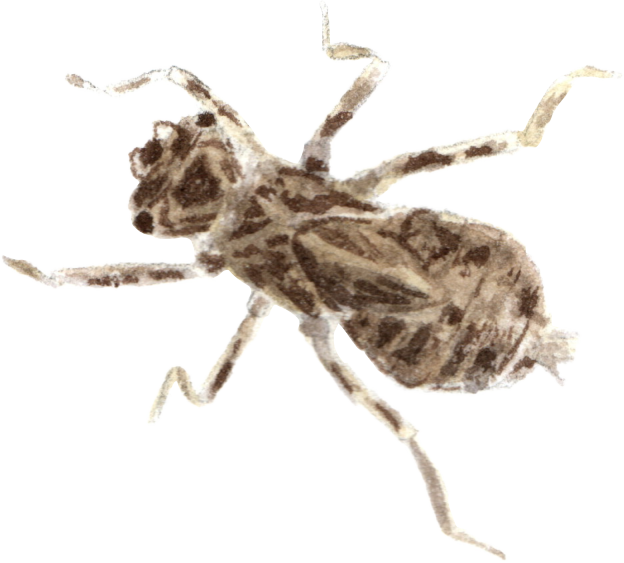
9. Dragonflies
Pollution Tolerance: moderately tolerant to pollution
Preferred Habitat: hide in mud and aquatic vegetation
Metamorphosis: incomplete
Size: 0.25”-2.5” long
ID Tips: big eyes, more stout than damselflies

10. Aquatic Isopods
Pollution Tolerance: moderately tolerant to pollution
Preferred Habitat: slow-moving streams, lakes, ponds
Metamorphosis: none
Size: 0.25”-0.75” long
ID Tips: think roly-poly but aquatic

11. Damselflies
Pollution Tolerance: moderately tolerant to pollution
Preferred Habitat: slow-moving streams, lakes, ponds
Metamorphosis: incomplete
Size: 0.25”-1.5” long
ID Tips: more slender than dragonflies
12. Scuds

Pollution Tolerance: moderately tolerant to pollution
Preferred Habitat: slow-moving streams, lakes, ponds
Metamorphosis: none
Size: 0.125”-0.5” long
ID Tips: think mini shrimp
13. Caseless Caddisflies
Pollution Tolerance: moderately tolerant or sensitive, depending on the species

Preferred Habitat: fast-moving streams
Metamorphosis: complete
Size: 0.1”-1” long
ID Tips: caterpillar-like bodies, with six legs and tufts or hooks at the end of the abdomen

14. Riffle Beetle Larvae
Pollution Tolerance: sensitive to pollution
Preferred Habitat: fast-moving, unpolluted streams
Metamorphosis: complete
Size: 0.125”-0.5” long
ID Tips: resemble grubs, often brown or almost black, three pairs of legs near the head

15. Water Pennies
Pollution Tolerance: moderately tolerant to pollution
Preferred Habitat: fast-moving streams
Metamorphosis: complete
Size: 0.15”-0.5” long
ID Tips: very flattened, segmented body

16. Black Fly Larvae
Pollution Tolerance: pollution tolerant
Preferred Habitat: fast-moving streams
Metamorphosis: complete
Size: 0.1”-0.3” long
ID Tips: club-shaped bodies, often attach themselves to rocks

17. Dobsonflies (Hellgrammites)
Pollution Tolerance: moderately tolerant to pollution
Preferred Habitat: fast-moving streams
Metamorphosis: complete
Size: 1”-3.5” long
ID Tips: segmented body with large mouthpieces, also look for filaments/gills on the abdomen

18. Mayflies
Pollution Tolerance: sensitive to pollution
Preferred Habitat: cool, clean streams, lakes, and ponds
Metamorphosis: incomplete
Size: 0.25”-1” long
ID Tips: look for three tails (cerci) and feather-like gills on the abdomen
The illustrations from this guide are available as a poster!
Preorders are open now and they'll ship on March 19th, 2026.
Perfect for anglers, students, educators, and river lovers, this print highlights the small but essential organisms that indicate water quality and support healthy fisheries.
A thoughtful gift for fly fishers and nature enthusiasts, or a helpful visual guide for anyone who wants to better understand what’s living beneath the surface.
This poster is part of my 2026 Spring Collection, Find Your River. It's all about western rivers and the crazy cool ecosystems they support! The collection drops March 19th.
Last semester, I conducted a survey of the macroinvertebrates of the Middle Provo River. My team and I were a part of an ongoing study aiming to monitor water quality, especially as the area becomes more developed.

We went out to the river every few days, collecting samples at fifteen sites along the way. Back at the lab, we sorted, counted, and preserved them to get a snapshot of the Provo's water quality.
What we found was very encouraging; we've actually seen an increase in the populations of pollution sensitive species!
It was a lot of work, but I really enjoyed exploring river ecosystems and learning about critters that were previously unfamiliar to me.
Whether you like to fish, you like bugs, or you're into water quality, the river connects us all. Let's flow together and share our expertise to protect river ecosystems!
Comments